
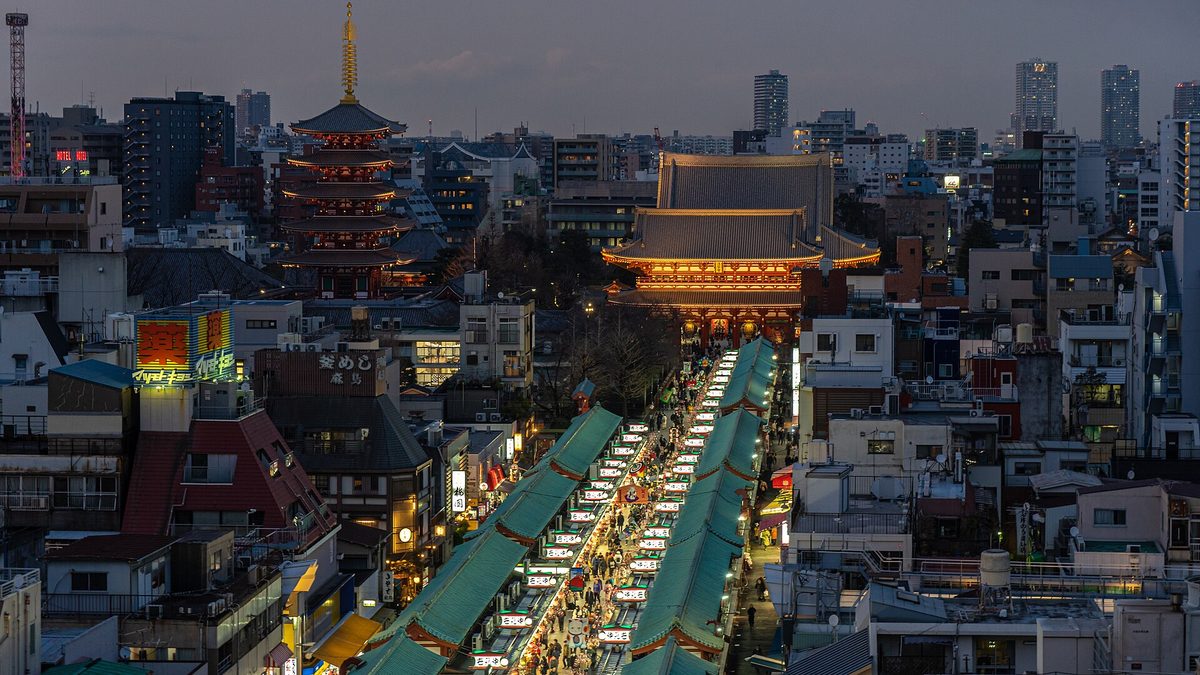
Places you can reach in the morning and leave in the evening. Public transport first; the car only where it really helps.
Kamakura and Enoshima
Seaside temple town that was Japan's political capital under the Kamakura shogunate (1185-1333): the bronze Great Buddha, Hasedera and the Tsurugaoka Hachimangu shrine, with the Enoden coastal line on to Enoshima island. Under an hour from Tokyo by JR; good for history lovers and families.
How to get there
- Train · JR East (Yokosuka Line) · 55 minFrom Tokyo Station (also Shinagawa)
Fare: JPY 1,040 one way (japan-guide.com, checked 2026-10)
Direct to Kamakura Station, 'just under an hour'. Also stops at Kita-Kamakura. Pay with a Suica or Pasmo IC card.
- Train · JR East (Shonan-Shinjuku Line) · 1 hFrom Shinjuku (also Shibuya, Ikebukuro)
Departures: about 2 direct trains per hour (Zushi-bound); others change at Ofuna
Fare: JPY 1,040 one way (japan-guide.com, checked 2026-10)
Only Zushi-bound trains run through to Kamakura.
- Train · Odakyu + Enoden (Enoshima-Kamakura Freepass) · 1 h 30 minFrom Shinjuku (Odakyu)
Fare: Enoshima-Kamakura Freepass JPY 1,640: Shinjuku-Katase-Enoshima return plus unlimited Enoden Fujisawa-Kamakura; Romancecar to Katase-Enoshima adds JPY 750 (Odakyu, checked 2026-10)
Cheapest way to do Kamakura and Enoshima in one day, but slower than JR. Enoden single fare Fujisawa-Kamakura (whole line) is JPY 310 adult.
What to see
- Great Buddha (Kotokuin). Bronze Amida Buddha cast in 1252, 11.4 m tall; 8:00-17:30 (to 17:00 Oct-Mar), no closing days, JPY 300 plus JPY 50 to enter the statue. 30-45 min.
- Hasedera. Temple famous for a 9.18 m gilded wooden eleven-headed Kannon; 8:00-17:00 (to 17:30 Apr-Jun), no closing days, JPY 400. About 1 hour.
- Tsurugaoka Hachimangu. Kamakura's most important shrine, founded 1063 and moved here in 1180 by Minamoto Yoritomo; 6:00-20:00, free. About 45 min.
- Enoshima. Hilly island off the Shonan coast joined to the mainland by a bridge; Mount Fuji visible on clear days. Reached by the Enoden line from Kamakura; half a day.
Closed days
Great Buddha, Hasedera and Tsurugaoka Hachimangu have no closing days (japan-guide.com). Hasedera museum: rare irregular closing days.
Best time to go
all year
By car
Public transport is the better way to go here. Not needed: direct JR trains from Tokyo and Shinjuku in about an hour, and the Enoden links the sights. Japan accepts only International Driving Permits issued under the 1949 Geneva Convention (not 1968 Vienna Convention permits), valid up to one year from entry; licences from Switzerland, Germany, France, Belgium, Monaco and Taiwan need an official Japanese translation instead (JAF).
Good to know
- From Kamakura Station walk to Tsurugaoka Hachimangu, then take the Enoden three stops to Hase: the Great Buddha is a 5-10 minute walk from Hase Station.
- Kamakura and Enoshima in one day: the Odakyu Enoshima-Kamakura Freepass (JPY 1,640) covers the round trip from Shinjuku and all Enoden rides between Fujisawa and Kamakura.
- Tsurugaoka Hachimangu holds horseback archery on the main approach during its Reitai-sai festival in mid-September (Time Out).
Nikko
Mountain town with Toshogu, the richly carved and gilded mausoleum shrine of shogun Tokugawa Ieyasu, and the temples around it, a UNESCO World Heritage site. A long but rewarding full day from Asakusa by Tobu limited express; add Kegon Falls and Lake Chuzenji if time allows.
How to get there
- Train · Tobu Railway (Limited Express SPACIA X / SPACIA) · 1 h 50 minFrom Asakusa (Tobu Asakusa; also Tokyo Skytree station)
Departures: 1-2 limited express trains per hour (SPACIA X e.g. 7:50, 9:00, 10:00 from Asakusa)
Fare: Limited express JPY 2,850-3,540 one way depending on train and date; slower express/local trains JPY 1,400 with 1-3 changes (japan-guide.com; Tobu, checked 2026-10)
All limited express seats reserved. SPACIA X 7:50 from Asakusa arrives Tobu-Nikko 9:39. Some limited expresses need a change at Shimo-Imaichi. Japan Rail Pass not valid.
- Train · JR East (Tohoku Shinkansen + JR Nikko Line) · 1 h 40 minFrom Tokyo or Ueno
Departures: hourly
Fare: about JPY 5,500 one way (japan-guide.com, checked 2026-10)
Change at Utsunomiya. Worth it mainly with a Japan Rail Pass.
- Train · JR East / Tobu through limited express · 2 hFrom Shinjuku
Departures: 1-2 trains a day
Fare: JPY 4,140 one way (japan-guide.com, checked 2026-10)
All seats reserved; covered by the JR Tokyo Wide Pass and JR East Pass.
What to see
- Toshogu Shrine. Memorial to Tokugawa Ieyasu, enlarged by his grandson Iemitsu in the early 1600s; carved 'see no evil' monkeys. 9:00-17:00 (to 16:00 Nov-Mar), no closing days, JPY 1,600. 1.5-2 hours.
- Taiyuin (Iemitsu Mausoleum). Mausoleum of the third shogun, built a little more modestly than Toshogu; 8:00-17:00 (to 16:00 Nov-Mar), no closing days, JPY 550. About 45 min.
- Rinnoji Temple. Sanbutsudo Hall; 8:00-17:00 (to 16:00 Nov-Mar), no closing days, JPY 400. 30 min.
- Shinkyo Bridge. Vermilion sacred bridge at the entrance to the shrine area. 10 min.
- Kegon Falls and Lake Chuzenji. 97 m waterfall, the only outlet of Lake Chuzenji, seen free from an observation platform; bus from Nikko about 50 min, JPY 1,250 one way. Half a day extra.
Closed days
Toshogu, Taiyuin and Rinnoji have no closing days; they close at 16:00 from November to March (japan-guide.com).
Best time to go
all year; autumn colours from early October at higher elevations
By car
Public transport is the better way to go here. Not recommended: in the October leaf season traffic between central Nikko and Lake Chuzenji is very heavy, especially at weekends (japan-guide.com). Japan accepts only International Driving Permits issued under the 1949 Geneva Convention (not 1968 Vienna Convention permits), valid up to one year from entry; licences from Switzerland, Germany, France, Belgium, Monaco and Taiwan need an official Japanese translation instead (JAF).
Good to know
- NIKKO PASS World Heritage Area (Tobu): JPY 3,000, 2 days, covers one Asakusa-Shimo-Imaichi round trip, Tobu trains to Tobu-Nikko and Tobu buses in the World Heritage area; limited express charge extra.
- The shrines are about 2 km from the stations: 30-40 min on foot up the main street, or 10 min by bus (JPY 350, day pass JPY 600).
- In October go on a weekday: weekend buses to Lake Chuzenji can be badly delayed.
Hakone
Hot-spring mountain resort in the Fuji-Hakone-Izu National Park: a loop by mountain railway, cable car, ropeway over the steaming Owakudani crater and pirate-ship boat across Lake Ashi, with Mount Fuji views on clear days. Best for onsen lovers, art fans and families; 80 min from Shinjuku by Romancecar.
How to get there
- Train · Odakyu Electric Railway (Limited Express Romancecar) · 1 h 20 minFrom Shinjuku (Odakyu)
Fare: JPY 2,470 one way (fare JPY 1,270 + Romancecar charge JPY 1,200); Hakone Freepass 2 days from Shinjuku JPY 7,100, plus JPY 1,200 for the Romancecar = JPY 8,300 (Odakyu, checked 2026-10)
All Romancecar seats reserved; JPY 50 cheaper as an e-ticket (EMot). Slower express trains with a change at Odawara take about 2 hours for JPY 1,270.
- Bus · Odakyu Highway Bus · 2 h 20 minFrom Shinjuku Station (Busta Shinjuku)
Departures: every 30-60 min
Fare: about JPY 2,200 one way (japan-guide.com, checked 2026-10)
Direct to the Lake Ashi side (Togendai, Hakone Prince Hotel); slower in traffic.
- Train · JR Central (Tokaido Shinkansen) to Odawara · 35 minFrom Tokyo or Shinagawa
Fare: about JPY 3,500 one way to Odawara (japan-guide.com, checked 2026-10)
About half an hour to Odawara (Kodama and some Hikari only), then Hakone Tozan or bus into Hakone. Useful with a Japan Rail Pass.
What to see
- Hakone Open-Air Museum. Sculpture park with a Picasso exhibition hall; 9:00-17:00 (last entry 16:30), no closing days, JPY 2,000. 1.5-2 hours.
- Owakudani. Volcanic crater with sulphur vents and black eggs boiled in the hot springs, on the Hakone Ropeway; Fuji views on clear days. Short crater trail needs advance booking (JPY 800); summit hiking trails currently closed. 45 min.
- Lake Ashi sightseeing boats. Pirate-ship boats between Togendai and Moto-Hakone/Hakone-machi, 25-40 min, JPY 1,700 one way (covered by the Hakone Freepass). Best Fuji views from Moto-Hakone.
- Hakone Tozan Railway. Small mountain trains climb from Hakone-Yumoto to Gora through a wooded valley, reversing at three switchbacks; about 35 min.
Closed days
Hakone Open-Air Museum has no closing days (japan-guide.com). Ropeway and boats can stop in strong wind or for volcanic gas warnings (not verified for current dates).
Best time to go
all year; Fuji views clearest in the colder months
By car
Public transport is the better way to go here. Not needed: the Hakone Freepass covers trains, cable car, ropeway, boats and buses on the loop. Japan accepts only International Driving Permits issued under the 1949 Geneva Convention (not 1968 Vienna Convention permits), valid up to one year from entry; licences from Switzerland, Germany, France, Belgium, Monaco and Taiwan need an official Japanese translation instead (JAF).
Good to know
- Do the 'Hakone Round Course' loop: Romancecar to Hakone-Yumoto, Tozan Railway to Gora, cable car to Sounzan, ropeway via Owakudani to Togendai, then the boat to Moto-Hakone or Hakone-machi.
- The Hakone Freepass (2 days, JPY 7,100 from Shinjuku since 1 Oct 2025) includes the round trip and unlimited Odakyu-group transport in Hakone; Freepass holders get the Shinjuku-Gotemba highway bus for JPY 1,000.
- Mount Fuji is often hidden by cloud; mornings and late afternoons in the cold season give the best chance.
Kawagoe
'Little Edo' (Koedo): a former castle town that supplied Edo, with a street of clay-walled kurazukuri merchant warehouses, the Toki no Kane bell tower, Candy Alley and Kitain temple. An easy half day from Ikebukuro, good for families and anyone short of time.
How to get there
- Train · Tobu Railway (Tobu Tojo Line) · 30 minFrom Ikebukuro
Departures: frequent express trains
Fare: JPY 490 one way; Kawagoe Discount Pass for foreign visitors JPY 710 round trip, JPY 1,050 premium with local buses (japan-guide.com, checked 2026-10)
To Kawagoe or Kawagoe-shi stations; Hon-Kawagoe (Seibu) is a little closer to the sights. Passes sold at Ikebukuro to non-residents only.
- Train · Seibu Railway (Seibu Shinjuku Line; Red Arrow limited express) · 45 minFrom Seibu-Shinjuku
Departures: frequent expresses; 1-2 limited expresses per hour
Fare: JPY 600 one way by express (50-60 min); limited express adds JPY 600 charge = JPY 1,200 (Seibu, japan-guide.com, checked 2026-10)
Hon-Kawagoe is the station closest to the sights (warehouse district 10-15 min walk). Limited express seats are all reserved; buying on board adds JPY 200.
- Train · JR East (Saikyo/Kawagoe Line) · 55 minFrom Shinjuku
Departures: frequent direct rapid trains
Fare: JPY 810 one way (japan-guide.com, checked 2026-10)
Covered by the Japan Rail Pass.
What to see
- Warehouse District (Kurazukuri Street). Fireproof clay-walled merchant houses, now shops and cafes; the Museum of Kurazukuri is closed indefinitely for renovation. 1 hour.
- Toki no Kane bell tower. 16 m tower, rebuilt 1894 after the Great Kawagoe Fire; rings at 6:00, 12:00, 15:00 and 18:00. 10 min.
- Kashiya Yokocho (Candy Alley). Lane of old-style sweet shops a minute from the warehouse street. 20-30 min.
- Kitain Temple. Head Tendai temple of the Kanto region, with the only surviving palace rooms of Edo Castle; 9:00-16:30, JPY 400. Closed 25 Dec-8 Jan, 2-3 Feb, 2-4 Apr. 45 min.
- Honmaru Goten (Kawagoe Castle). The castle's only surviving building, the lord's palace; 9:00-17:00, JPY 100. Closed Mondays and the 4th Friday of the month. 30 min.
Closed days
Honmaru Goten closed Mondays (Tuesday if Monday is a holiday) and the 4th Friday of each month; Kitain closed 25 Dec-8 Jan, 2-3 Feb and 2-4 Apr; Museum of Kurazukuri closed indefinitely for renovation (japan-guide.com). The streets are open every day.
Best time to go
all year; Kawagoe Festival on the third weekend of October
By car
Public transport is the better way to go here. Not needed: three rail lines from Ikebukuro and Shinjuku in 30-60 min, and the old town is walkable. Japan accepts only International Driving Permits issued under the 1949 Geneva Convention (not 1968 Vienna Convention permits), valid up to one year from entry; licences from Switzerland, Germany, France, Belgium, Monaco and Taiwan need an official Japanese translation instead (JAF).
Good to know
- From Hon-Kawagoe walk to the warehouse district along Taisho-roman Street (10-15 min); Kitain and Honmaru Goten are each about 10 min on foot from there.
- Two tourist loop buses: Tobu Koedo Loop Bus day pass JPY 400; Co-Edo Loop Bus JPY 220 a ride, JPY 600 a day.
- Avoid Mondays if you want to see inside Honmaru Goten.
Lake Kawaguchiko (Fuji Five Lakes)
Lake resort at the northern foot of Mount Fuji, the easiest of the Fuji Five Lakes to reach from Tokyo, with the classic Fuji views from the lake shore and the Panoramic Ropeway. A full day by direct bus or train from Shinjuku; for nature lovers and photographers, on a clear day.
How to get there
- Bus · Fujikyu / Keio Bus (highway bus) · 1 h 55 minFrom Shinjuku Bus Terminal (Busta Shinjuku)
Departures: about 2 buses per hour
Fare: JPY 2,200 one way (JPY 2,000 online) (japan-guide.com, checked 2026-10)
Most buses stop at Fujisan Station and Fuji-Q Highland before Kawaguchiko Station. Japan Rail Pass not valid. Operator fare page not opened.
- Train · JR East + Fujikyu Railway (Limited Express Fuji Excursion) · 1 h 53 minFrom Shinjuku
Departures: 4 round trips a day
Fare: JPY 4,200 one way including reserved-seat limited express charge (Ekitan, July 2026; checked 2026-10)
Direct, all seats reserved; ride in cars 1-3, which split off at Otsuki. JR passes cover only Shinjuku-Otsuki.
- Train · JR East (Chuo Line) + Fujikyu Railway · 2 h 30 minFrom Shinjuku
Fare: JPY 2,580-4,200 depending on train; Otsuki-Kawaguchiko on Fujikyu JPY 1,170 (japan-guide.com, checked 2026-10)
Change at Otsuki; local trains to Otsuki take about 100 min, limited express 70 min.
What to see
- Lake Kawaguchiko shore. Fuji views across the lake; Time Out names the northeastern shore next to Kawaguchiko Music Forest as the best photo spot. Red Omni bus line (Kawaguchiko Line) every 15 min from the station.
- Mount Fuji Panoramic Ropeway. Rises 400 m from the eastern shore to a deck over 1,000 m up with views of the lake and Fuji; 8:30-17:00, no closing days, JPY 1,000 return. 1 hour.
- Lake Saiko. Quieter lake west of Kawaguchiko on the green Omni bus line (every 30 min).
Closed days
Mount Fuji Panoramic Ropeway has no closing days (japan-guide.com).
Best time to go
clearest Fuji views in winter; April cherry blossom and November leaves
By car
Public transport is the better way to go here. Bus or train from Shinjuku is simpler; rental cars near Kawaguchiko Station are useful for the lakes away from Kawaguchiko (japan-guide.com). Japan accepts only International Driving Permits issued under the 1949 Geneva Convention (not 1968 Vienna Convention permits), valid up to one year from entry; licences from Switzerland, Germany, France, Belgium, Monaco and Taiwan need an official Japanese translation instead (JAF).
Good to know
- Check the weather: clouds often hide Mount Fuji; dry winter air gives the clearest views.
- Kawaguchiko Saiko Motosuko Bus Pass: JPY 1,500 for 1 day, JPY 2,000 for 2 days, valid on the three Omni bus lines; sold at Kawaguchiko Station.