
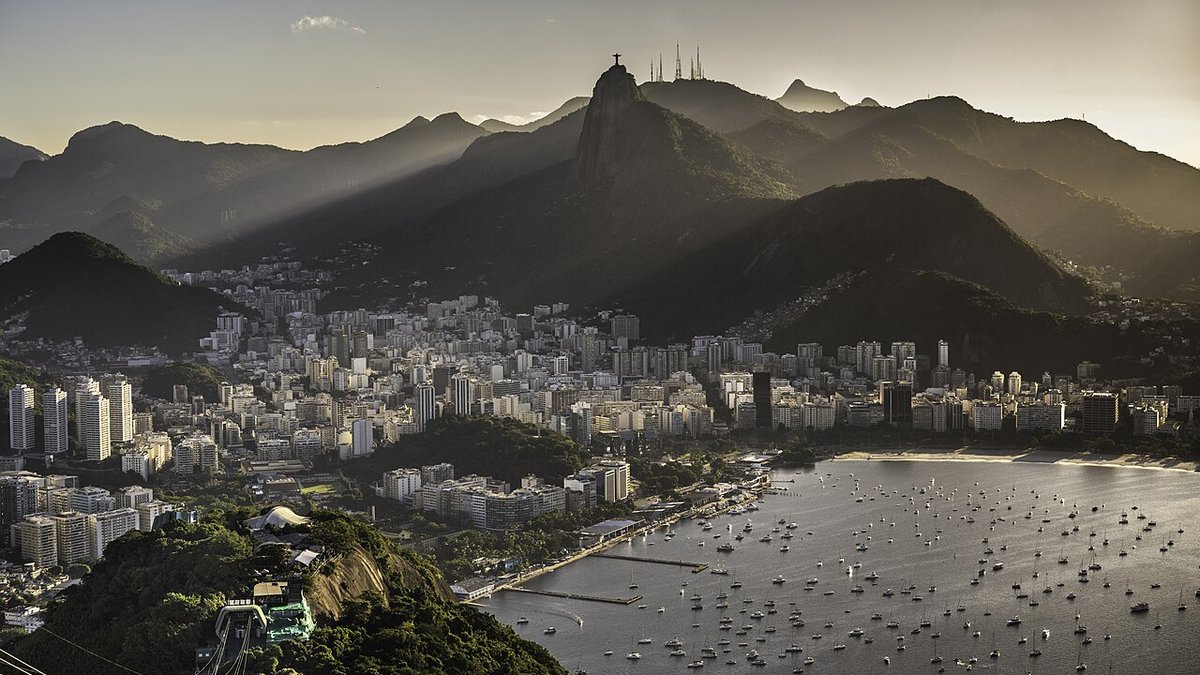
The port district where enslaved Africans landed and where samba was born: the Valongo Wharf (a UNESCO World Heritage Site), the burial ground of the Pretos Novos, the hanging garden of Valongo, the old hill of Morro da Conceição and the quilombo rock of Pedra do Sal, ending at the new museums of Praça Mauá.
Best time: Tuesday to Friday from 10:00 (the IPN is open Tue-Fri 10:00-16:00 and Sat 10:00-13:00; the MAR is closed on Wednesdays and free on Tuesdays). Come back to Pedra do Sal for samba from 18:00, Friday to Monday.
The route, stop by stop
- 1Instituto Pretos Novos (IPN)
Memorial and museum over the cemetery of the 'pretos novos', newly arrived enslaved Africans who died after landing; run as a research institute since 2005 (Tue-Fri 10:00-16:00, Sat 10:00-13:00). 40 min
- 2Valongo Wharf
The stone wharf built in 1811 where between 500,000 and one million enslaved Africans landed until 1831; later the Empress's Wharf. 20 min
- 3Jardim Suspenso do Valongo
Romantic garden of 1906 by Luis Rey, 7 m above the street on the slope of Morro da Conceição; reached by stairs from Rua Camerino. 15 min
- 4Pedra do Sal
Rock with carved steps, a former quilombo site listed by INEPAC in 1984 and the centre of 'Little Africa', where Donga, João da Baiana and Pixinguinha played. Samba circles Friday to Monday from 18:00 (Time Out). 15 min
- 5Fortaleza da Conceição (Morro da Conceição)
18th-century fortress on top of Morro da Conceição, one of the four hills where the city grew; walk the quiet residential lanes that kept their old Portuguese-quarter feel. 30 min
- 6Rio Art Museum (MAR)
Art museum on Praça Mauá opened in 2013, in two linked buildings with a rooftop view of the port (11:00-18:00, closed Wednesdays; BRL 20, free on Tuesdays). 75 min
- 7Museum of Tomorrow
Santiago Calatrava's science museum on the Mauá pier, opened in 2015 (BRL 40, half price BRL 20; BRL 10 on the 10th of each month). 90 min
More walks in Rio de Janeiro
- Praça XV to São Bento: the colonial and imperial centre
- Cinelândia to Lapa: belle époque avenues, the aqueduct and the Selarón steps
- Santa Teresa by bonde and on foot
- Glória, Catete and the Aterro do Flamengo
- Urca: Praia Vermelha, the Cláudio Coutinho path and the Mureta at sunset
- Leme to Arpoador along Copacabana beach
- Ipanema to Leblon: bossa nova streets and the Mirante
- Parque Lage, the Botanical Garden and the Lagoa
- Tijuca Forest: Cascatinha and the Mayrink chapel
- Laranjeiras and Cosme Velho: Parque Guinle to the Corcovado train
- Niterói by ferry: Caminho Niemeyer to the MAC